Artificial intelligence is changing how people develop software, manage businesses and approach cybersecurity. It is also changing how security researchers investigate software vulnerabilities.
Recent reports about critical PHP vulnerabilities have brought these developments into focus. Researchers used AI-assisted techniques to help identify and investigate weaknesses in PHP, a programming language used by a large proportion of websites worldwide.
For website owners, the key lesson is not to fear artificial intelligence. It is to recognise that cybersecurity requires ongoing attention, timely updates and cooperation between hosting providers and website administrators.
At Magna Host, our servers and PHP versions have been updated to address the reported vulnerabilities. Here is what the developments mean for your website and the steps you can take to maintain better security.
How AI is changing cybersecurity
AI tools can help security professionals analyse software, identify unusual patterns and investigate potential weaknesses. Tasks that once required substantial manual analysis may sometimes be completed more efficiently with AI assistance.
This can benefit cybersecurity in several ways.
-
Security researchers can investigate software weaknesses more efficiently.
-
Developers can use AI-assisted tools to identify potential problems during development.
-
Security teams can analyse information and prioritise their responses to emerging threats.
-
Software maintainers can use research findings to improve products and prepare security fixes.
However, the same technological progress can create challenges. Capabilities that help defenders analyse software may also help malicious actors investigate weaknesses.
That is why organisations must treat software maintenance and vulnerability response as ongoing responsibilities rather than one-time tasks.
What happened with the recent PHP vulnerabilities?
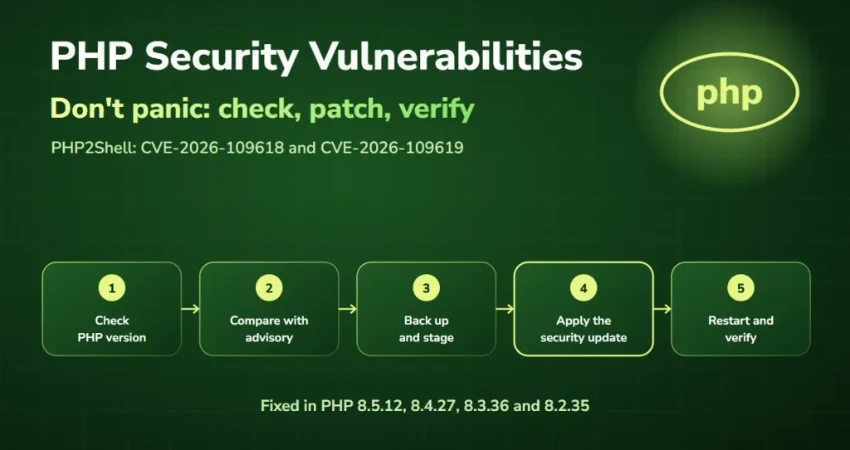
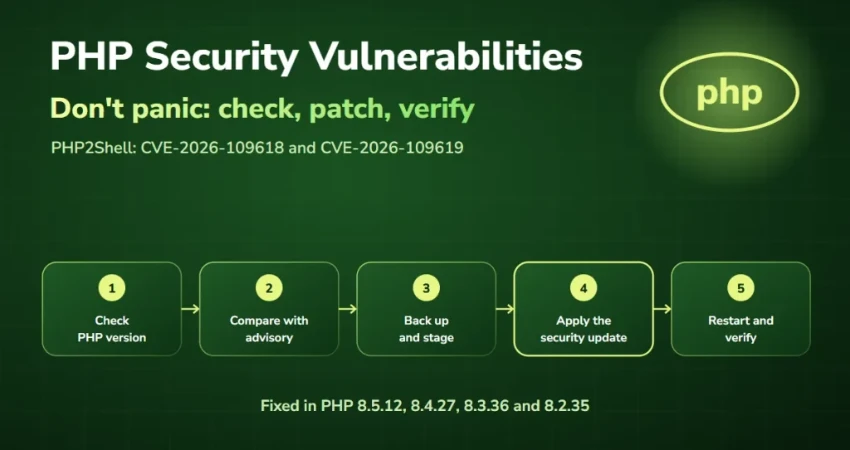
On 21 October 2026, PHP published security releases addressing two critical vulnerabilities identified as CVE-2026-109618 and CVE-2026-109619. Researchers reported that AI-assisted investigation contributed to the discovery and analysis of the issues.
The vulnerabilities affect PHP's core engine, which processes requests before many PHP-based applications complete their own processing.
Under affected conditions, the flaws could potentially allow remote code execution or exposure of sensitive memory information. This is why applying the relevant security updates is important.
The PHP project released patched versions for the 8.2, 8.3, 8.4 and 8.5 branches. Older versions that no longer receive security fixes require particular attention because installing ordinary application updates does not necessarily resolve weaknesses in the underlying PHP runtime.
Does using AI mean your website is at risk?
Not automatically.
The involvement of AI in discovering a vulnerability does not mean AI has compromised every website running PHP. The risk comes from the underlying software weakness and whether the affected system has been appropriately updated or otherwise protected.
It is useful to separate three things:
-
AI-assisted discovery: Researchers use AI to help investigate software and find weaknesses.
-
The vulnerability itself: A defect in software may create a security risk when particular conditions are met.
-
The security response: Developers and hosting providers release and apply fixes to address the defect.
Understanding this distinction helps website owners make informed decisions rather than reacting to alarming headlines.
How Magna Host is responding
At Magna Host, we recognise the importance of responding to significant security developments.
Our servers and PHP versions have been updated to address the vulnerabilities covered in the recent reports. We continue to prioritise appropriate server maintenance and the reliability of our hosting environment.
This helps address the specific reported PHP issues, but responsible security communication also requires acknowledging that no single update can eliminate every possible cybersecurity risk.
Website owners should continue maintaining their own applications and accounts to reduce exposure to separate vulnerabilities.
Six website security practices worth following
1. Keep PHP and website applications updated
Use PHP versions that receive security support and ensure that the relevant security fixes have been applied. Keep your CMS, frameworks, plugins and themes updated as well.
2. Remove software you no longer use
Unused themes, plugins and applications can create additional maintenance requirements. Remove components you no longer need and ensure the remaining software comes from trusted sources.
3. Protect administrator accounts
Use unique, strong passwords for hosting and website accounts. Enable multifactor authentication where available, and limit administrator access to people who need it.
4. Back up your website regularly
Back up both your website files and databases. Keep copies that can be recovered if a website is damaged, compromised or affected by a failed update.
5. Monitor your website
Pay attention to unexpected changes, unusual account activity, unfamiliar administrator accounts and unexplained website errors. If something seems wrong, seek assistance from a qualified technical professional or your hosting provider.
6. Ask questions when security news emerges
You do not need to interpret every technical security advisory on your own. Ask your hosting provider whether the relevant updates have been applied and whether you need to take any additional steps.
Why reliable hosting matters in the AI era
As AI continues to evolve, businesses will need hosting providers that understand the importance of security maintenance and dependable infrastructure.
A good hosting service should offer more than server space. It should provide a reliable foundation for your website, with appropriate maintenance and support to help you manage your online presence.
Magna Host provides affordable hosting solutions for individuals, entrepreneurs and businesses looking to establish or grow online. Our focus is on combining affordability, reliability and security-conscious server management.
Conclusion: Stay informed, not alarmed
The recent PHP vulnerabilities demonstrate how quickly cybersecurity developments can attract global attention. They also highlight the value of collaboration between security researchers, software maintainers and hosting providers.
AI may change how vulnerabilities are discovered, but the fundamentals of website security remain important: apply appropriate updates, maintain strong access controls, back up your data and work with a hosting provider that takes security seriously.
Magna Host has updated its servers and PHP versions to address the reported vulnerabilities. We encourage all customers to keep their own website software updated and contact our team if they have questions about their hosting environment.
Ready to establish or grow your online presence? Visit Magna Host to explore affordable web hosting, email hosting, WordPress hosting and domain registration services in Kenya.
Build your online presence with Magna Host — Fast, Secure, and Reliable Hosting.

Magna Host Team
Magna Host Offers Fast, Secure, affordable and Reliable Web Hosting, Email Hosting and Domain Name Registration Services in Kenya.